Shipmates
A logistics aggregator that lets small businesses in the Philippines book shipments across every major courier — in one flow, on desktop and mobile.
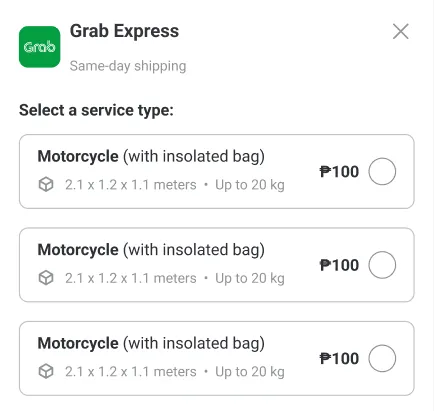
Shipmates is a logistics aggregator helping small and medium businesses book shipments across multiple couriers — Borzo, GrabExpress, J&T Express, and Lalamove — in one flow, instead of managing separate relationships with each carrier.
One flow, every courier — no phone calls.
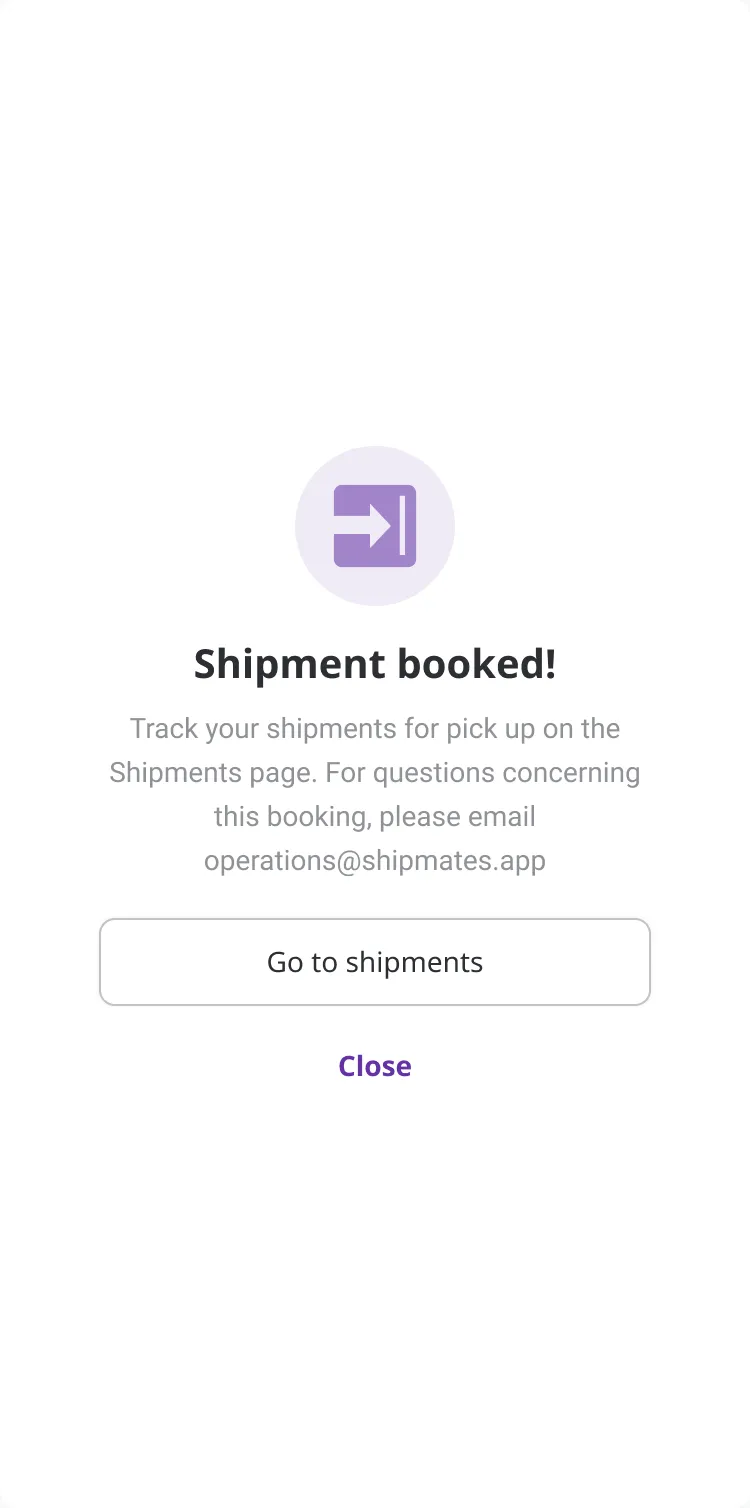
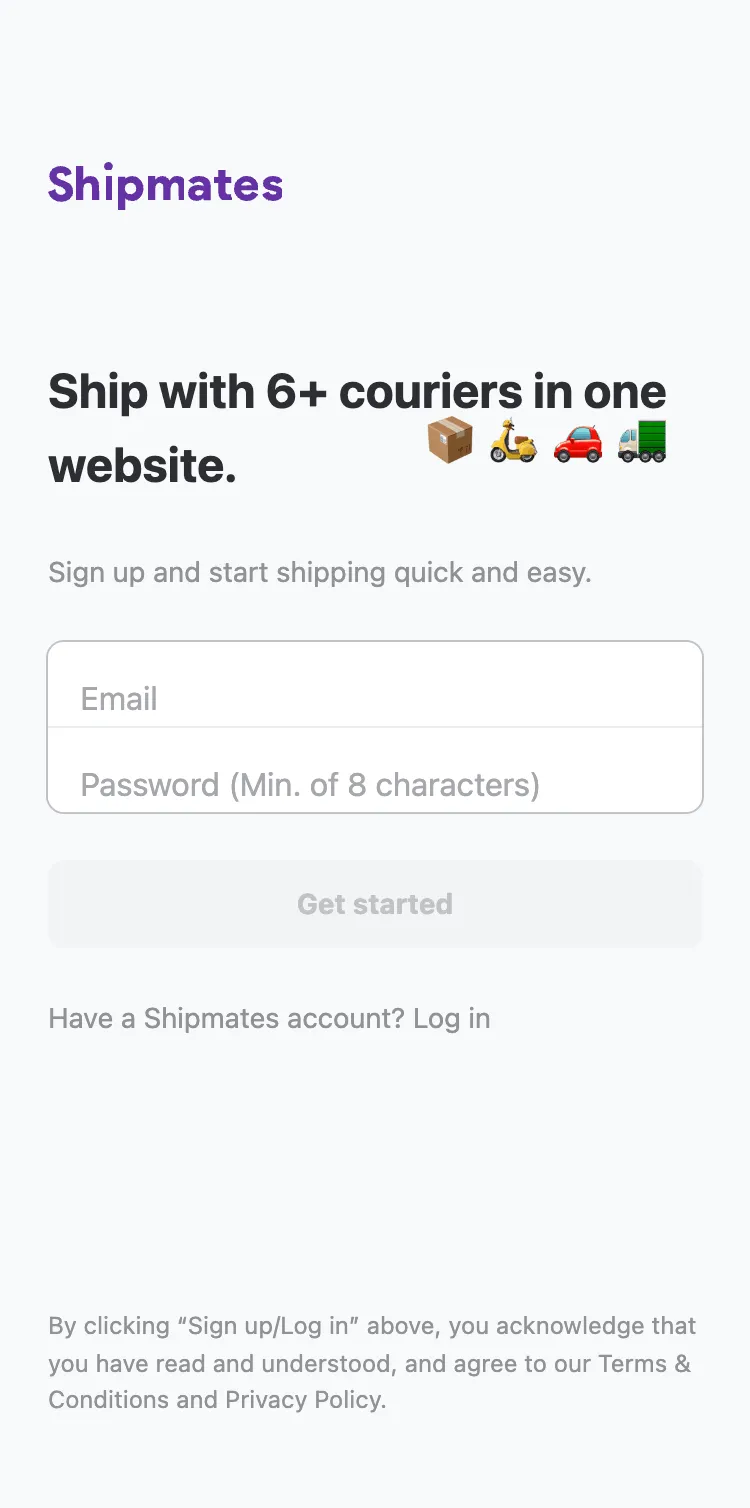
The core booking path was designed collaboratively — my co-designer and I split the screens across the product. Here's the mobile walkthrough, from sign-up to the fee breakdown just before a shipment goes out.
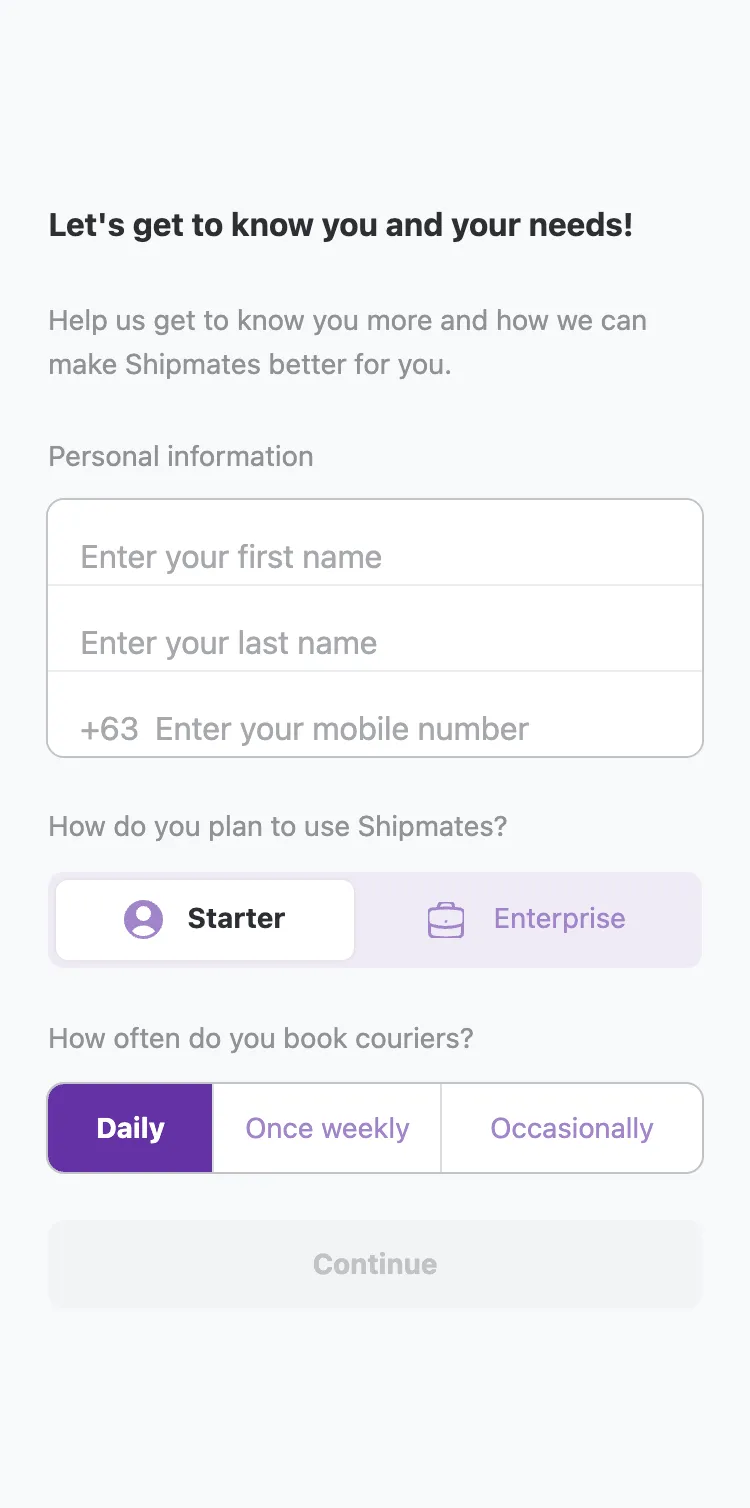
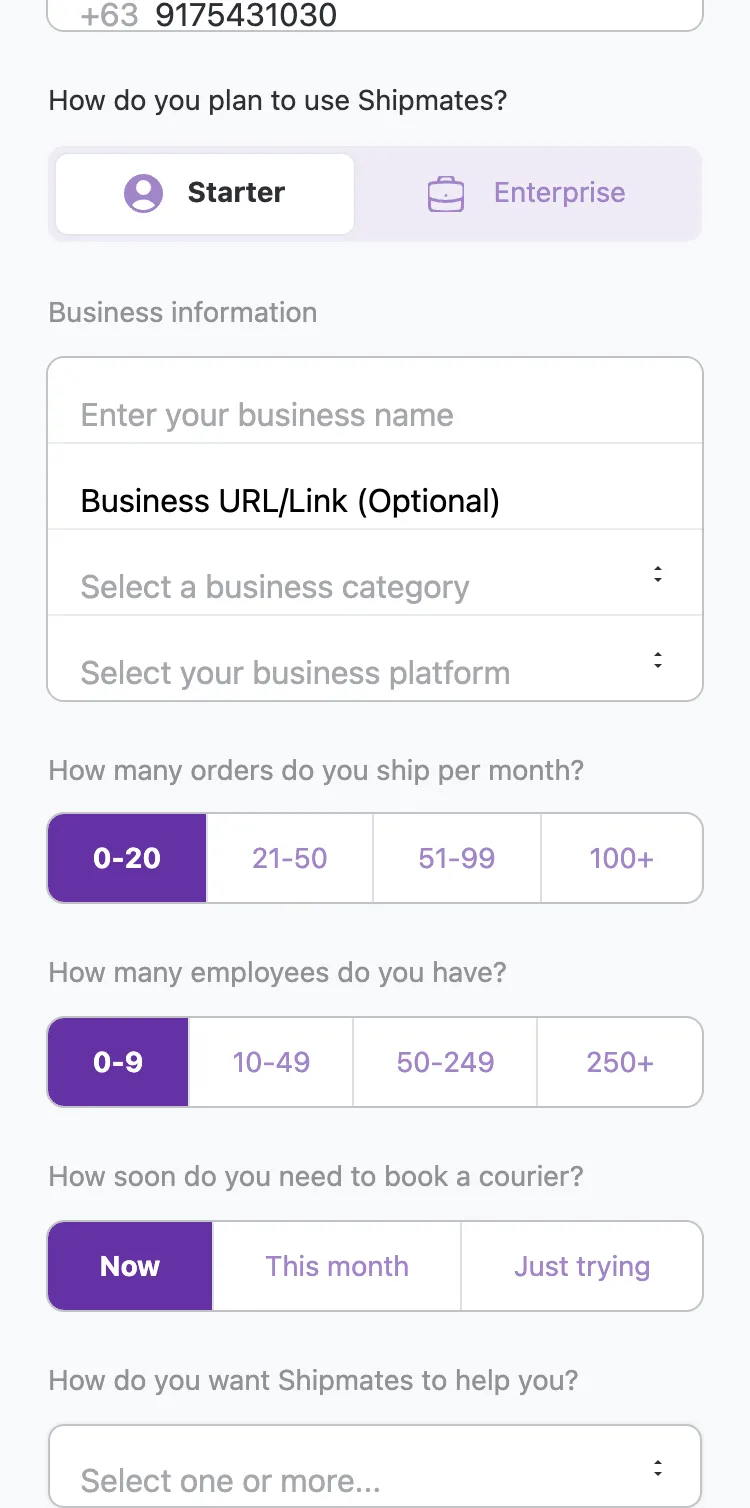
Onboarding adapted to business size. Starter accounts completed a quick sign-up, while Enterprise accounts answered deeper questions about order volume, team size, and how they planned to use Shipmates — helping tailor the experience from day one.
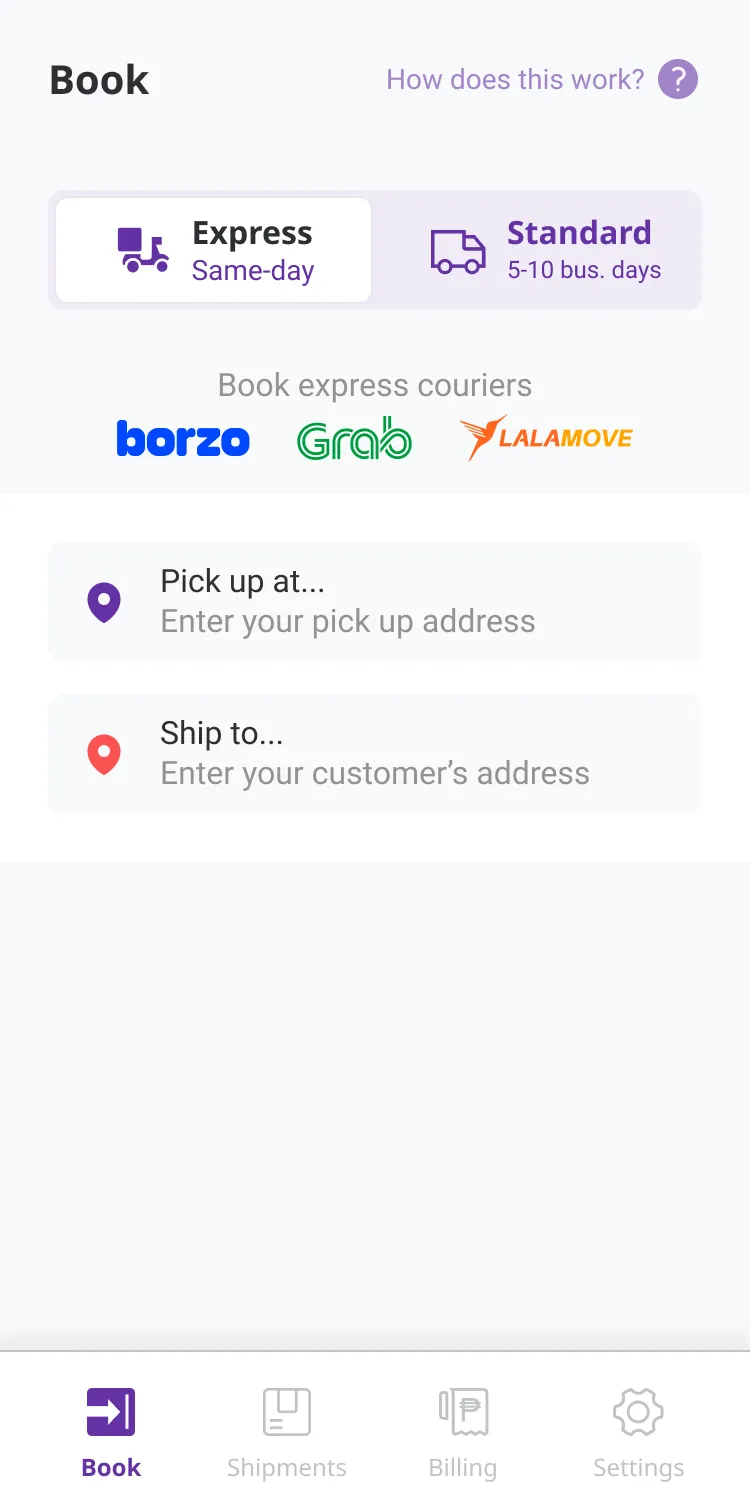
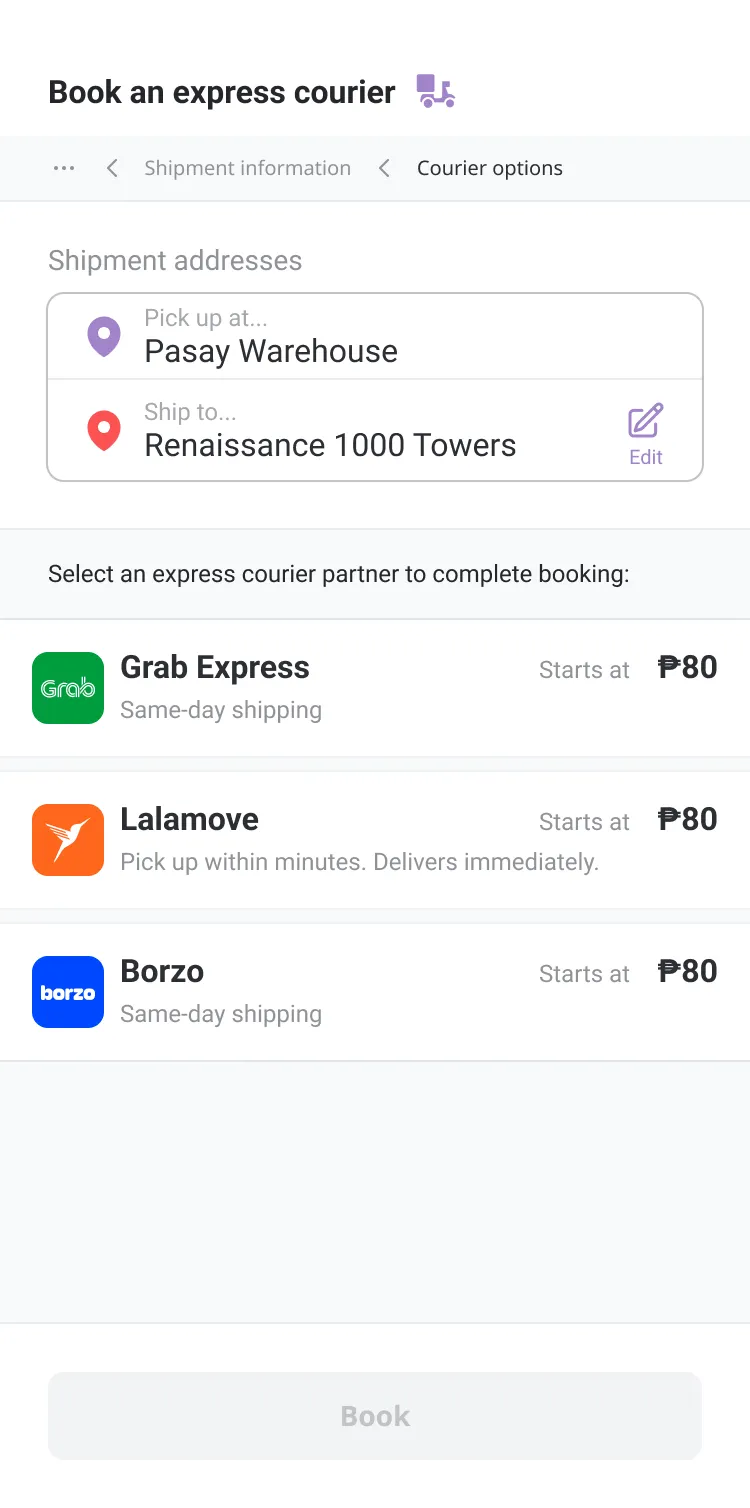
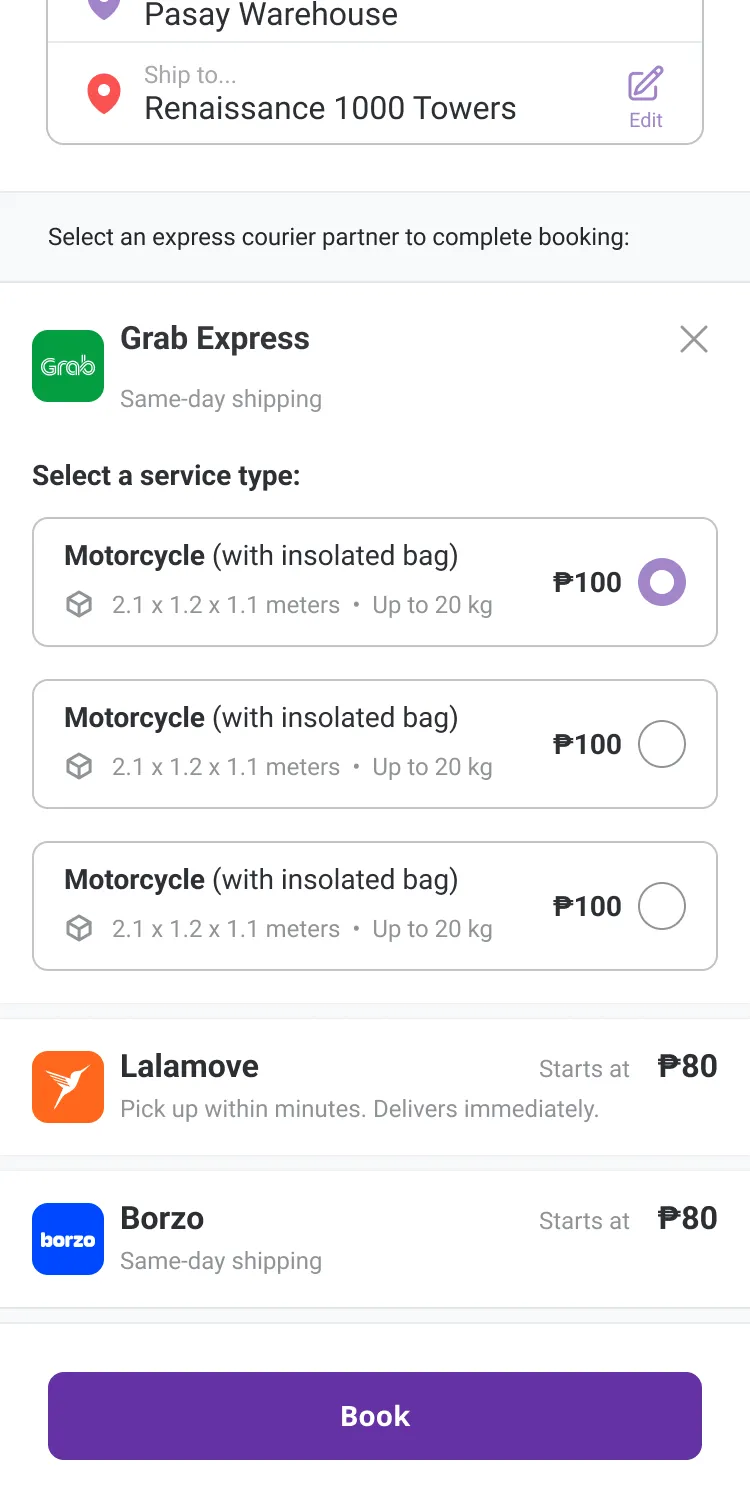
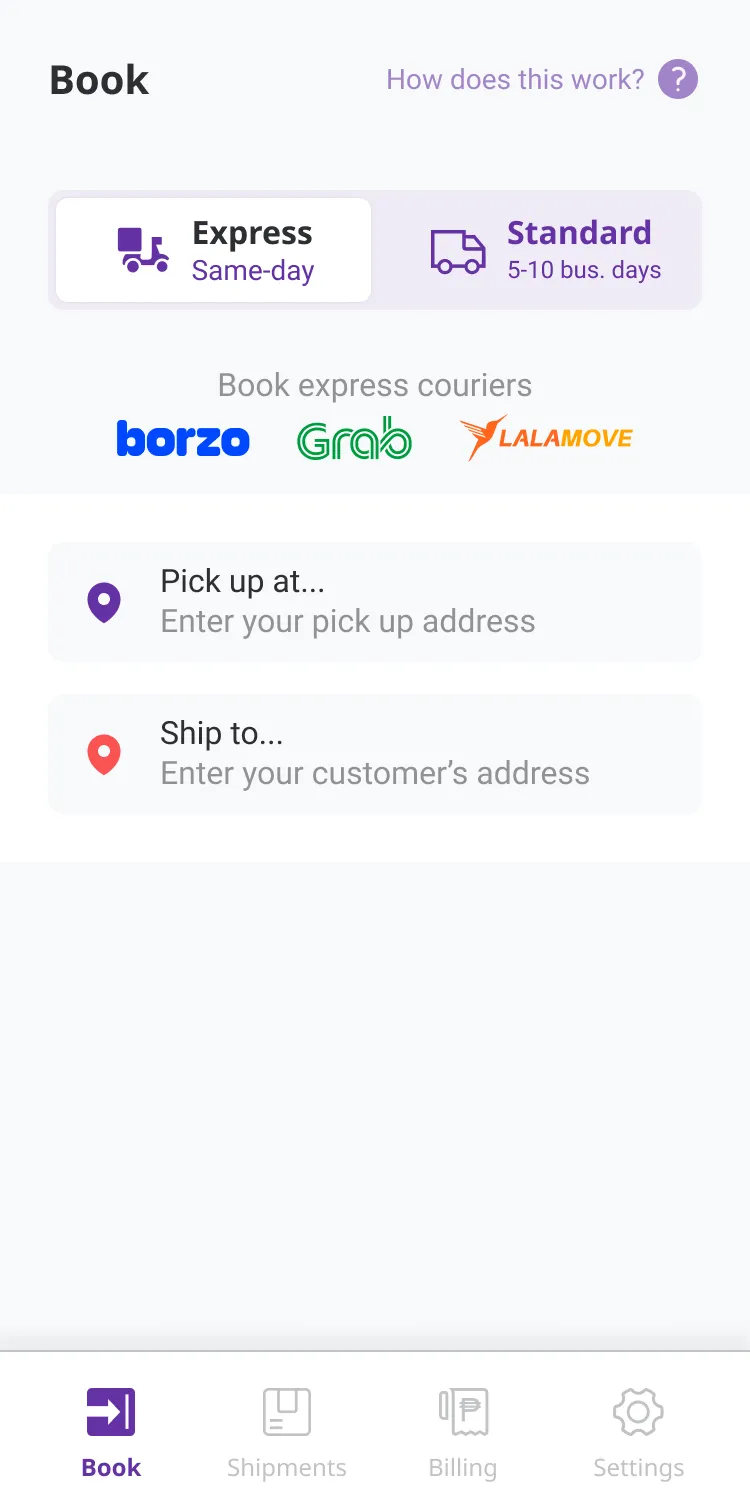
The Book screen is the hub: pick Express or Standard, see the courier partners up front, and pull in Multiple Orders or Shopify Orders when a business is shipping at volume. From there you choose a courier and the service type — motorcycle, sedan — and the rate comes with it.
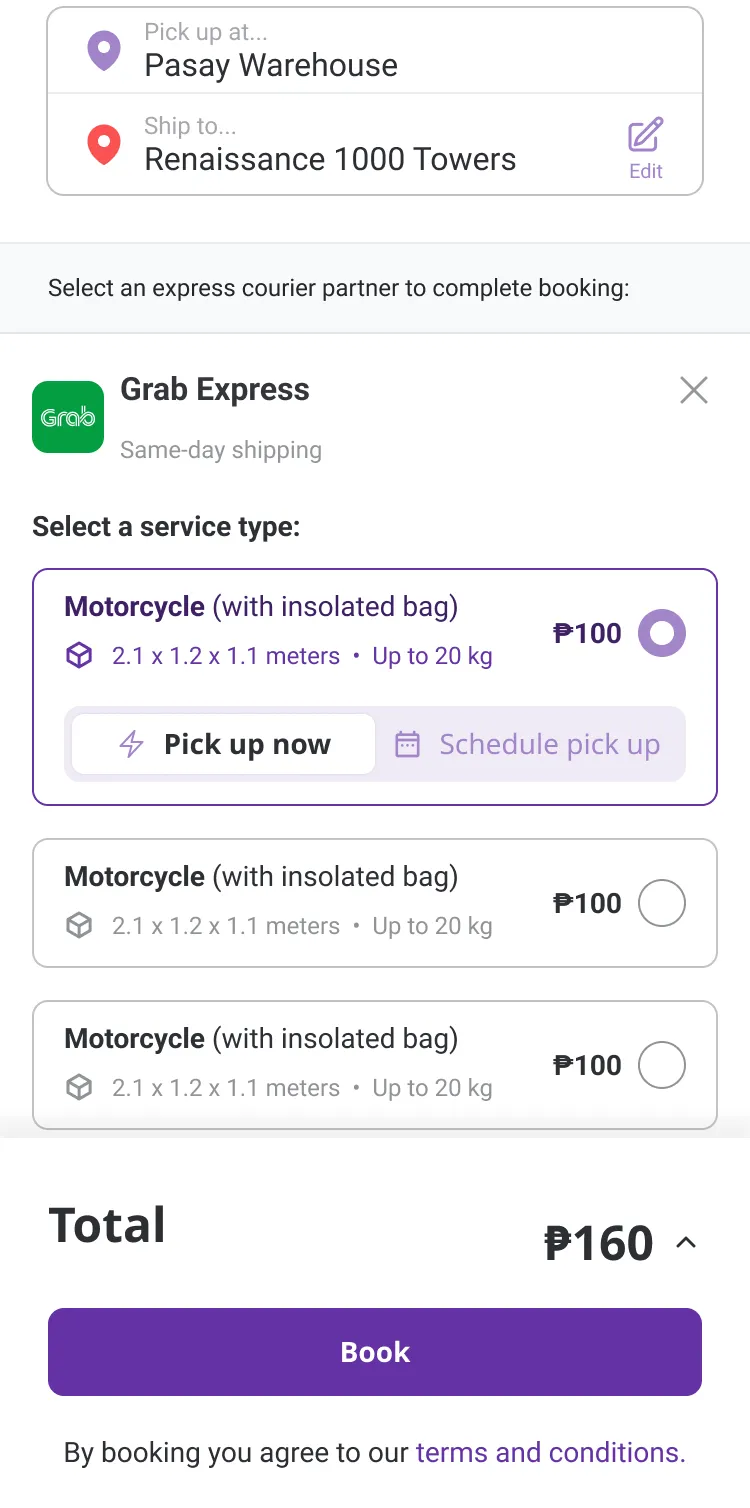
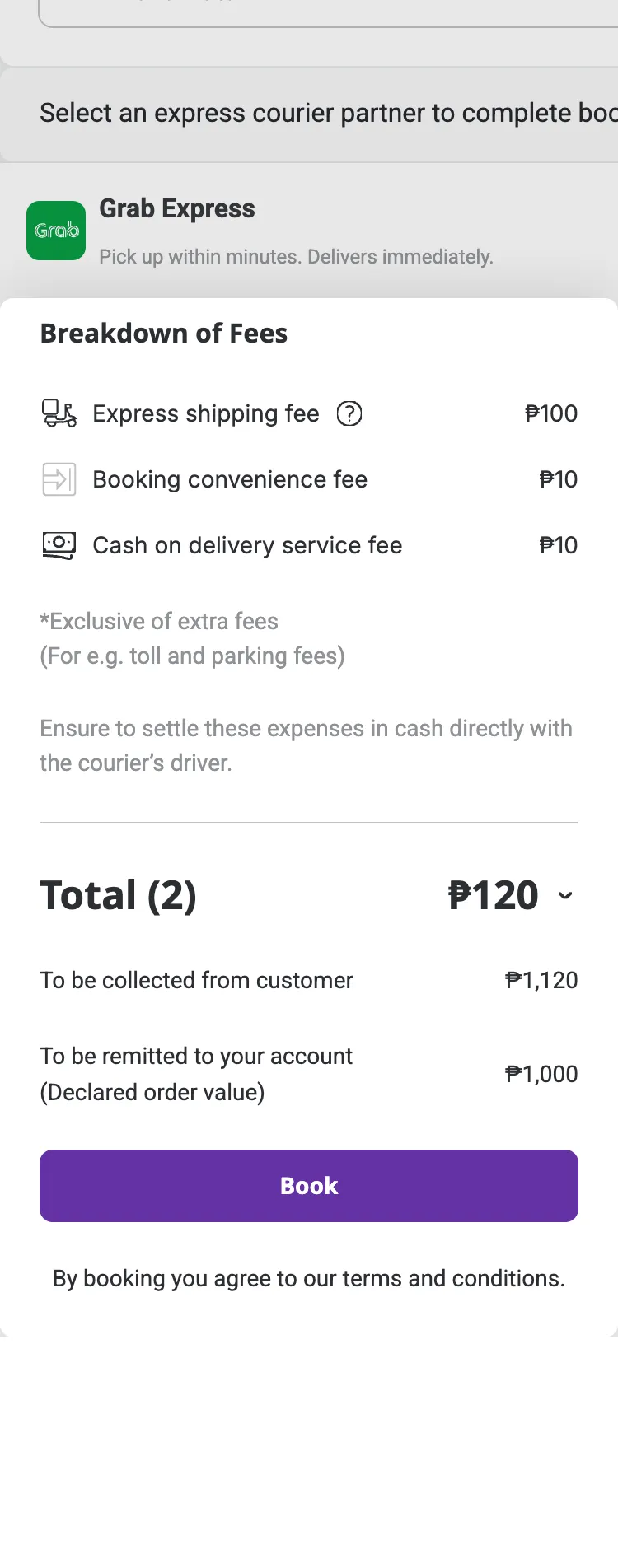
Before a booking is confirmed, the full breakdown of fees is laid out — so an owner knows exactly what they're paying across the carrier and the service, with no surprises after the fact.
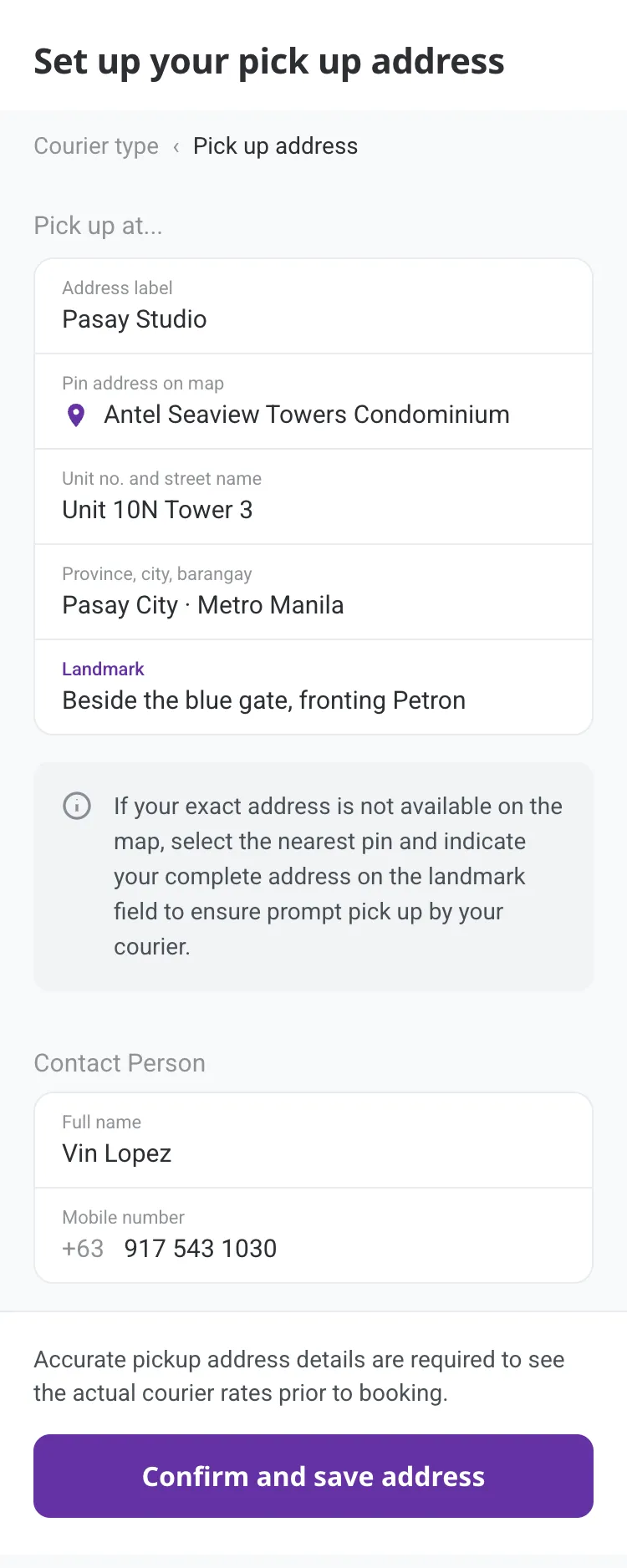
When the address doesn't exist on the map
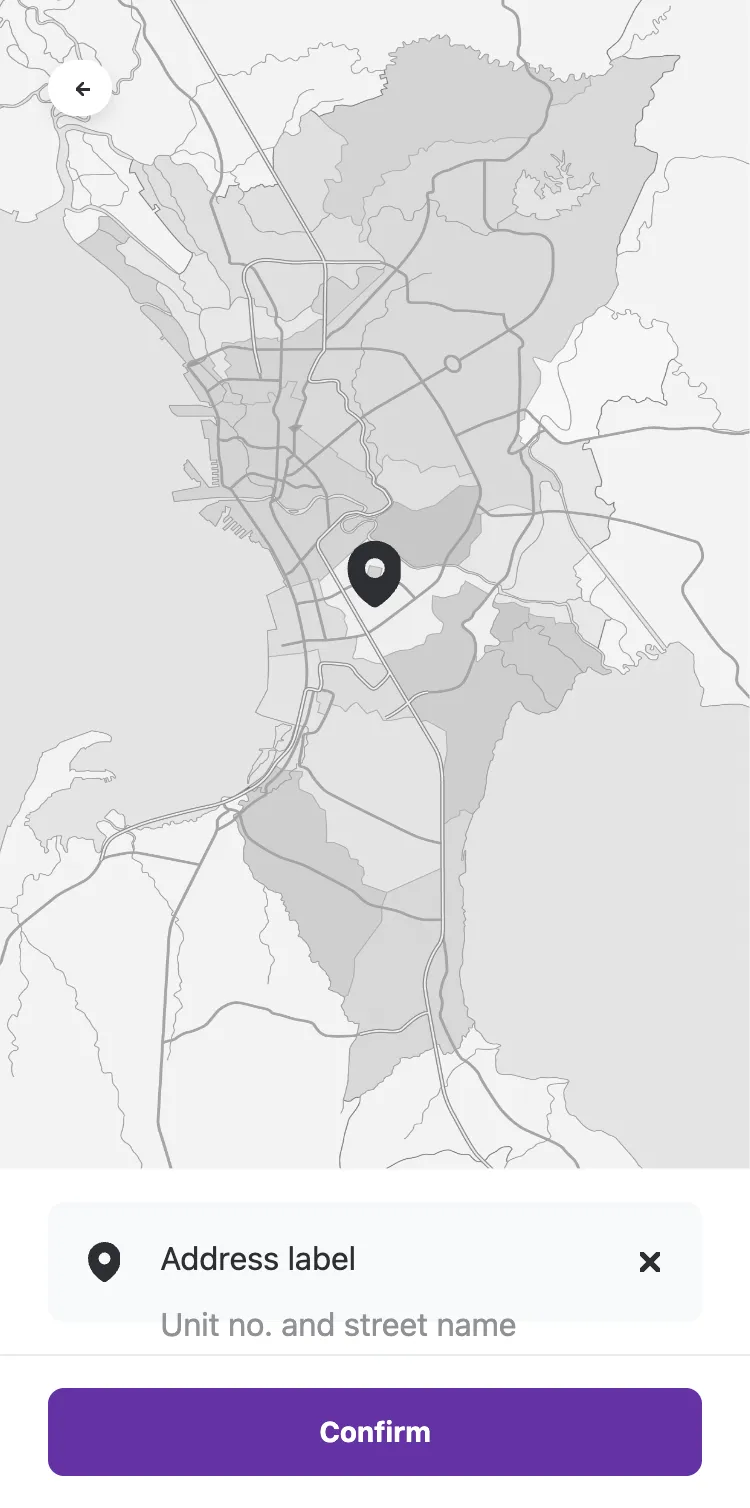
One flow I owned was the address input experience. During testing, we found a recurring blocker: many business addresses — especially in provincial or barangay-level areas — simply didn't exist on Google Maps.
I designed a fallback: if the exact address isn't available, users can drop a pin at the nearest known point and add a landmark to help the courier find the exact location — matching how people actually give directions in the Philippines.
Designing for what you can't control
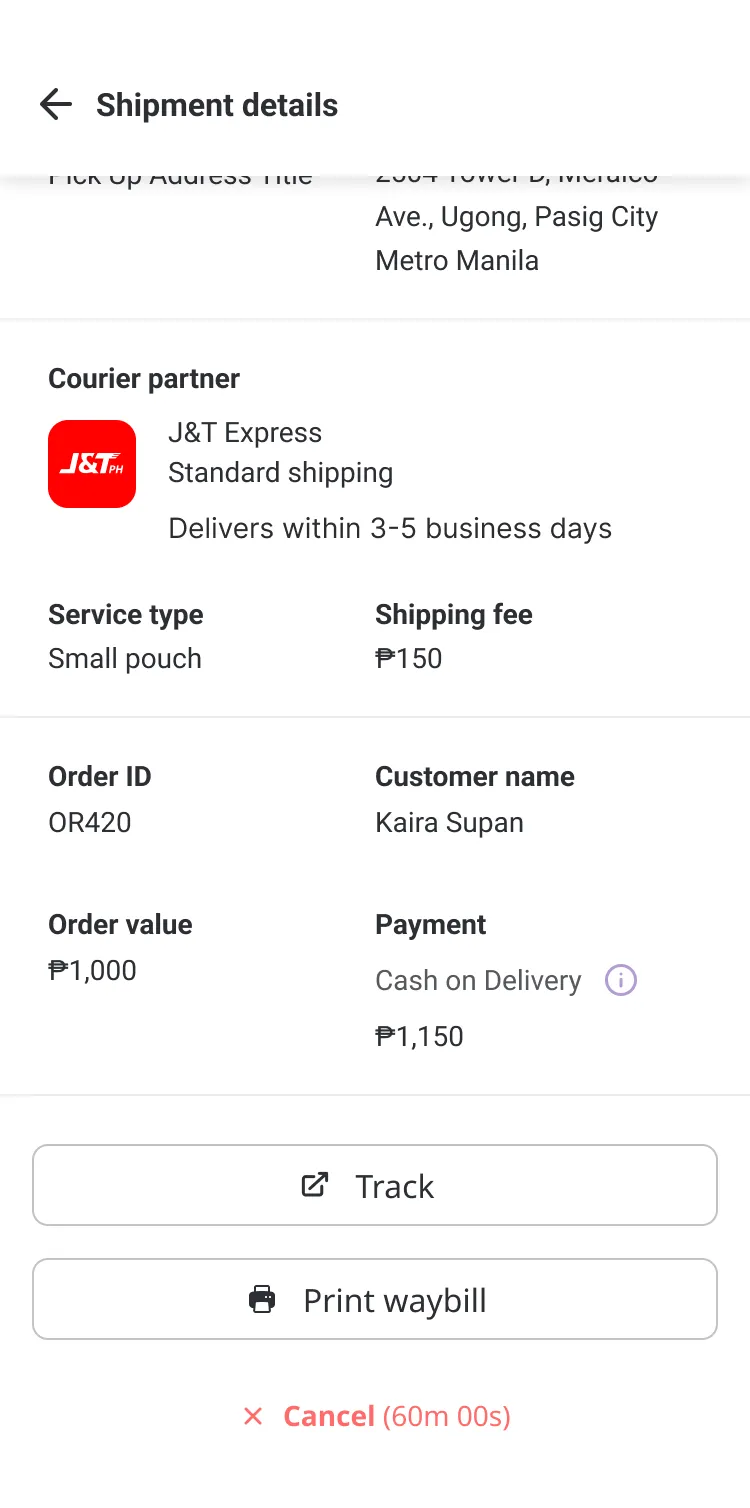
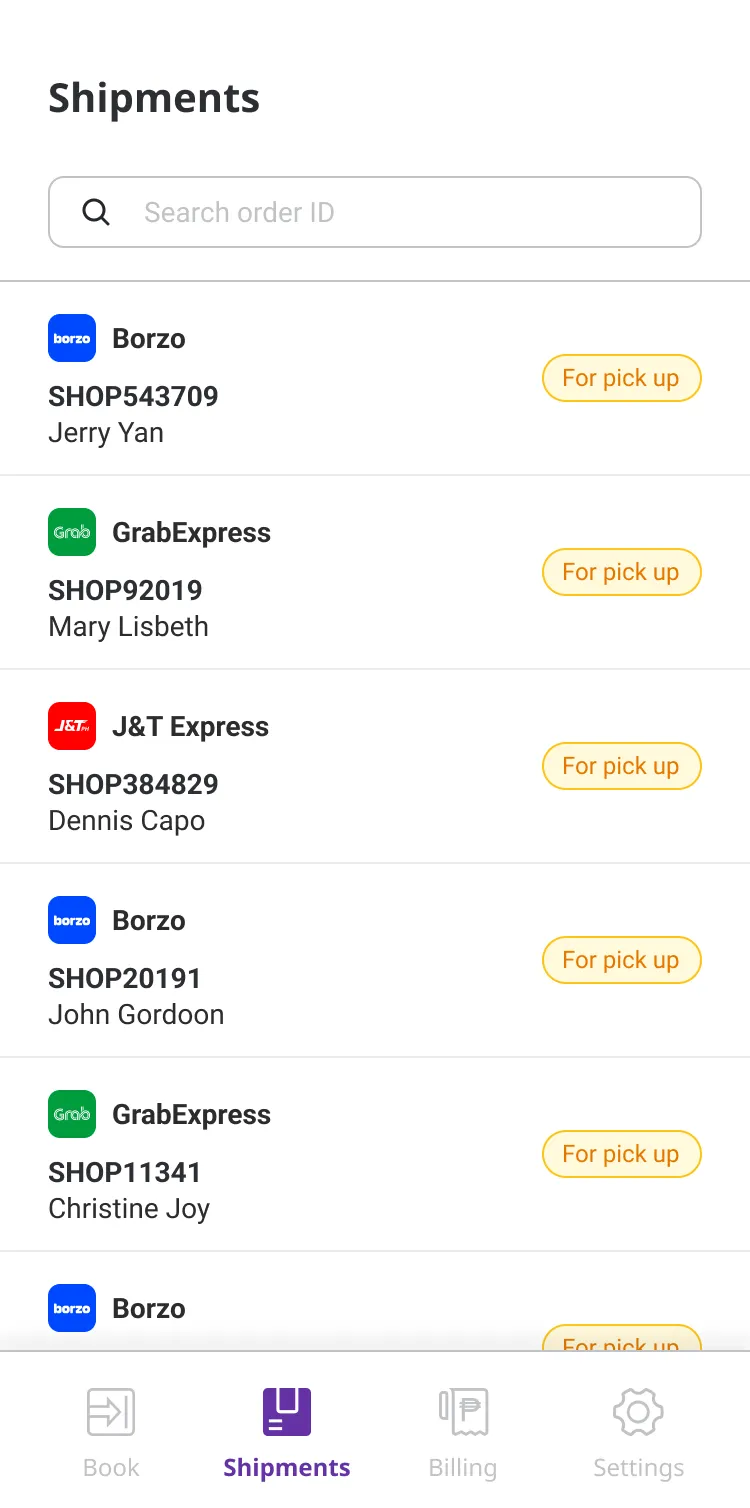
Another flow I owned was post-booking tracking. As an aggregator, Shipmates doesn't control the couriers directly — shipments can get delayed or pickups missed.
I designed a detailed tracking view so business owners always know their shipment status, and have a direct path to track, get a waybill, or cancel — without needing to call support.
This was a design study, so the goals are framed around intent rather than shipped metrics — the outcomes each decision was made to move.